Animals without us
July 2, 2026
written by Fiona van Schendel
How quickly we become unsettled by the small intrusions of the non-human, an animal. The rustling of a mouse behind a wall. The body of a slug in the palm of your hand. A spider above your bed. We respond almost instinctively with distance: remove it, relocate it, eliminate it.
The encounters documented by photographers such as Zana Briski, Leila Jeffreys, James Mollison, and Vincent Munier (all four included in the show ANIMAL MODEL at Rencontres d’Arles) ask for precisely the opposite response. Zana Briski is very used to sit beside large animals such as American black bears in complete darkness. Leila Jeffreys spends months building a relationship with birds of prey before photographing them. James Mollison describes gently plucking a single hair from the chin of a chimpanzee—only to interrupt its attention just enough for it to look into the camera. Vincent Munier experienced lying motionless in Arctic snow, more than 175 miles from the nearest settlement, while wild white wolves cautiously approached to investigate his presence.
In each of these encounters, the artists do not feel estranged, nor morally ‘better’. They instead feel a deep and long connection that is accompanied with respect for the animal’s space, mentally or physically. They do not give ‘orders’ to the animals but wait and give space and time for the animal to continue to do what he/she was doing. Foraging, nibbling, scratching, yearning, singing, staring.
As such, they aim to register an encounter without transforming the animal into an illustration of human meaning. So the animal does not become a symbol for divine order, or an icon in an art historical painting; nor a symbol for lost love. Nor are they deployed in the framework of colonial history as seen in some exhibitions today where animal exploitation and colonial expansion are presented as inseparable narratives.
A recent example of that is the exhibition ‘State of Wander: Towards Environmental Restoration’ at Paleis Het Loo in the Netherlands, praised in Frieze magazine by writer Angel Lambo. Lambo applauded the fact that this exhibition links our colonial past to environmental crisis and crisis in animal welfare. Though colonial expansion undeniably accelerated global systems of extraction in which animals, landscapes and human beings alike were transformed into commodities, this framework raises questions. It privileges one historical trajectory while overlooking earlier transformations in humanity’s relationship with nature, such as the Agricultural Revolution 15.000 years ago when humans began systematically domesticating animals and reshaping ecosystems, and before, the long history of hunter-gatherer societies.
More importantly, we wonder whether the current tendency to interpret animal exploitation primarily through colonial history helps us to solve the ecological crises and crisis in animal welfare we face today. For this reason, we find the work of Greek artist Janis Rafa particularly compelling. Her current exhibition at EMΣT in Athens focuses on the complex relationship humans have constructed with horses. Rafa shows us our ‘use’ of horses for our pleasure, far removed from its own instincts, physicality and desires. She highlights the seductive yet often malicious and sadistic bond at the heart of this age-old relationship. And she does not show any horse, but, the human-made constructions such as bridles, saddles, reins, fences and architectural enclosure that reveal how control is often disguised as affection, and how care can become a misunderstanding of love itself. No colonial or historical context is needed here.
But even here, the horse remains viewed through a human perspective.
Just like in the current show, ‘Frida: The Making of an Icon’ at Tate Modern London that includes the self-portraits of Frida Kahlo. In “Untitled Self-Portrait with Thorn Necklace and Hummingbird” the hummingbird that she wears around her neck is seen as a creature associated with freedom, as well as the Aztec god of war. Or her pet monkey (a gift to her by Diego Rivera) who draws her blood, could stand for her painful relationship with Rivera. It is an assumption by Tate Modern curator Tobias Ostrander who said to the BBC : “The monkey is the symbol of the suffering that she was emotionally feeling from Rivera, but then the cat is ready to pounce.” Though there are many multilayered interpretations, one thing was clear. Her bond to animals and nature was real.
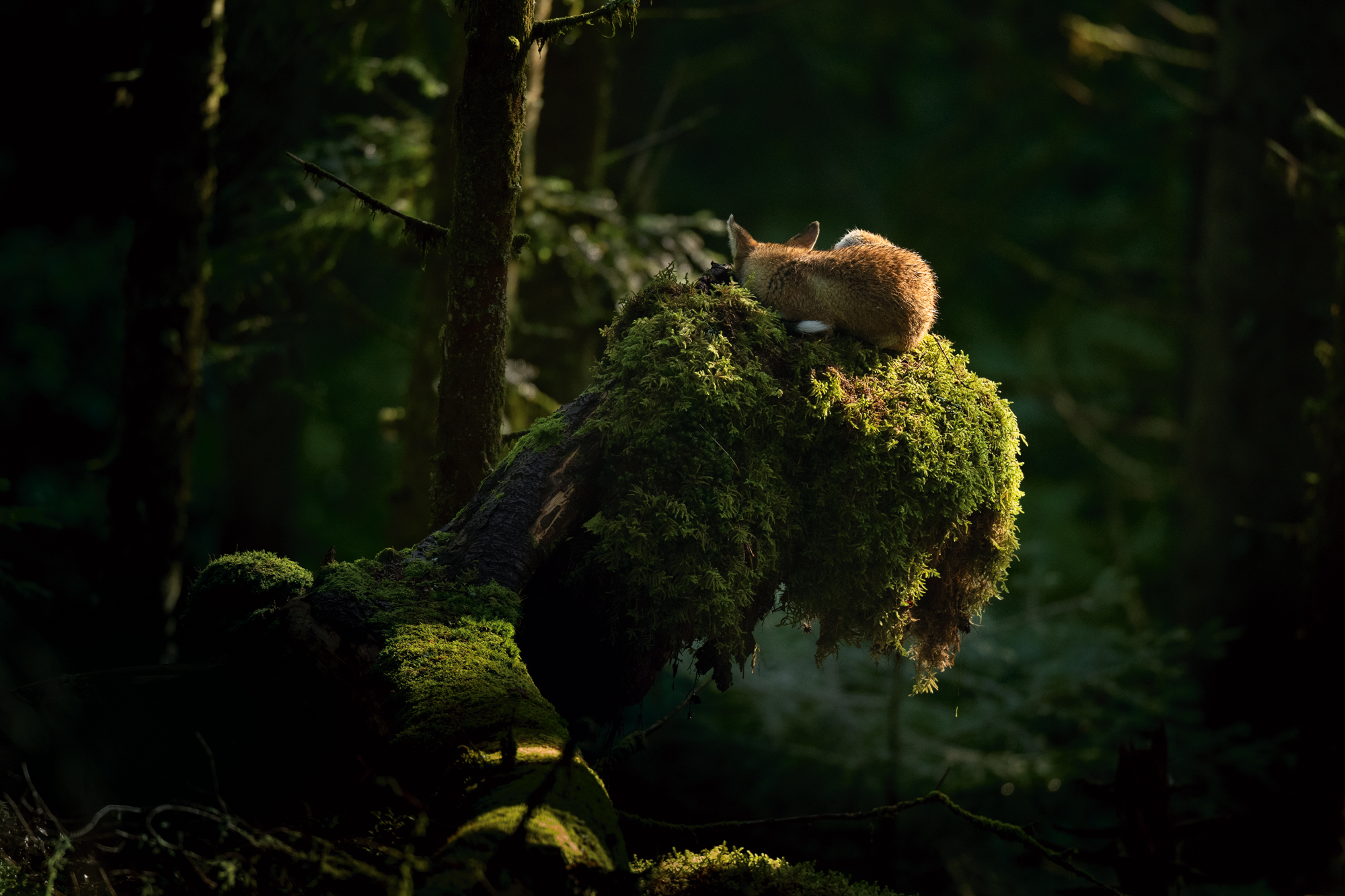
The registration done by Zana Briski, Leila Jeffreys, James Mollison and Vincent Munier is of a different kind. Animals are presented to us as the animals they are. Not a victim, not an icon, not a metaphor, not a symbol, but as ‘entities’ in their own right. Looking at these works, one becomes aware not only of morphology—the intricate geometry of feathers, fur, skin and muscle—but also of everything the image evokes: migratory routes traced across continents; territories invisible to us; social lives unfolding beyond human observation; sensory worlds inaccessible to our own.
Their photographs become less an act of possession than an admission of distance. Their work asks very little of the animal.
Perhaps this is where these practices differ most fundamentally from much contemporary ecological discourse. Rather than asking what animals reveal about ourselves, they ask whether we are capable of looking without immediately translating them into our own histories, ethics or political metaphors.
Not every encounter needs to become self-reflection.
Sometimes an animal can simply remain an animal.
ANIMAL MODEL at RENCONTRES D’ARLES from
July 6, 2026 – October 4, 2026.
‘State of Wander: Towards Environmental Restoration’ at Paleis Het Loo in the Netherlands
Until September 27, 2026
‘Frida: The Making of an Icon’
Tate Modern London
Until January 3, 2027
Janis Rafa
We Betrayed the Horses
4 April – 5 October 2025